
A U.S. Academician Joins MedComm as an Editor-in-Chief

Open the phone and scan
Now MedComm is privileged to have Prof. Günter P. Wagner, a U.S. Academician as an Editor-in-Chief.

Günter P. Wagner
A member of the American National Academy of Sciences
A member of the American Association for the Advancement of Science
A member of the American Academy of Arts and Sciences, and the Austrian Academy of Sciences
A MacArthur Fellow
Prof. Günter P. Wagner is a pioneer of the field of evolutionary developmental biology. His research interest is the evolution of gene regulation, evolutionary medicine, obstetrics, and reproductive sciences.
Prof. Günter P. Wagner spent many years on research and teaching at the Max Planck Institutes for Biophysical Chemistry and Developmental Biology (Germany), and Department of Zoology, U. Vienna (Austria). Currently, he is a professor of the Department of Ecology and Evolutionary Biology at Yale University, and a professor of the Department of Obstetrics, Gynecology and Reproductive Sciences at Yale Medical School.
Prof. Günter P. Wagner has published around 200 academic papers in internationally renowned journals, including Nature, Nature Genetics, Genome Research, Nature Review, NEJM, Science and PNAS. He used to serve as the editor-in-chief of the Journal of Experimental Zoology and a member of editorial board of several international medical journals. Prof. Günter P. Wagner received the MacArthur Fellowship (also known as the "Genius Grant”) and is a member of the American National Academy of Sciences, the American Association for the Advancement of Science, the American Academy of Arts and Sciences, and the Austrian Academy of Sciences.
About MedComm
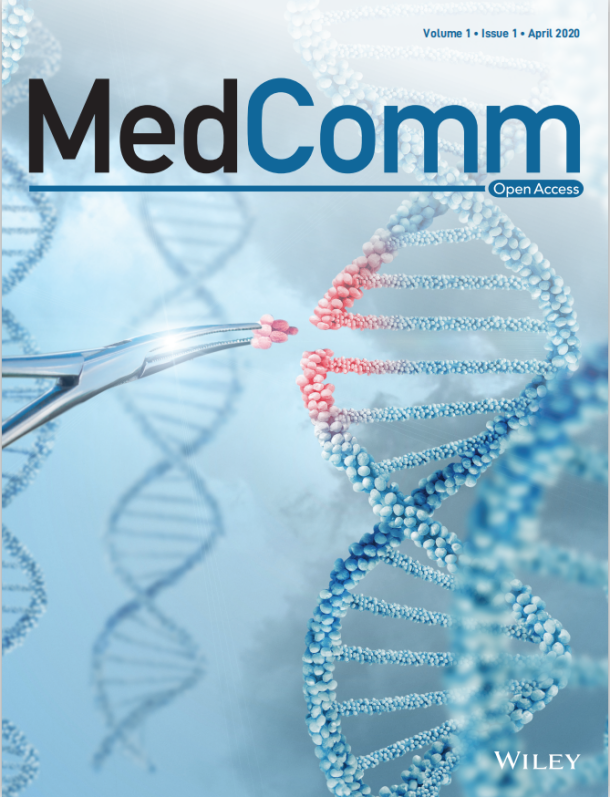
MedComm is an English professional journal of biomedicine published by Wiley—the biggest publisher in the world (https://onlinelibrary.wiley.com/journal/26882663, click "Read more" on the bottom of the text). Its editors-in-chief include Prof. James Henderson Naismith of University of Oxford (a fellow of the Royal Society (UK) and the Royal Society of Edinburgh) , Prof. Günter P. Wagner of Yale University (a member of the American National Academy of Sciences, the American Association for the Advancement of Science, the American Academy of Arts and Sciences), and Prof. Wei Yuquan of the State Key Laboratory of Biotherapy at West China Hospital, Sichuan University (an academician of the Chinese Academy of Sciences), and its associate editors and editorial board members comprise eminent scientists from more than 10 countries in the world. Academician Wu Yuquan, one of the editors-in-chief, also founded the Signal Transduction and Targeted Therapy (with an Impact Factor of 13.493 in 2019) in 2016.
MedComm is a peer-reviewed, online open access journal that timely publishes the basic research and clinical research works in biomedicine, and strives to become a high-quality academic journal with the greatest international influence in the field of biomedicine. The journal publishes reviews, perspectives, research articles, letters to editors, research highlights and so on, and the Article Publication Charge is waived for accepted manuscripts from 2020-2022. In addition, the format of manuscripts is not limited at the time of submission and will be revised according to the requirements of the journal when it is officially accepted for publication.
MedComm cordially invites all science researchers, doctors and postgraduates in the field of biomedicine to submit manuscripts.

